Finding The Best Ultrasound Tech School: Requirements And Accreditations

So, you're thinking about becoming an ultrasound tech? Awesome! Seriously, how cool is that? You get to peek inside people's bodies, see tiny heartbeats, and maybe even catch the first glimpse of a gummy bear baby. It's like being a real-life detective, but with way better technology and a lot less trench coat. Plus, the job market is booming! Everyone needs a good scan now and then, right?
But before you start imagining yourself wielding that magic wand (okay, it's a transducer, but "magic wand" is way more fun), there's a little bit of homework to do. Namely, finding the right school. And trust me, not all ultrasound tech programs are created equal. Some will have you zapping through your textbooks, while others might feel more like a magical mystery tour. We're here to help you find the best one, the one that'll make you the superhero of sonography!
The Nitty-Gritty: What You Actually Need
Alright, let's get down to business. What do you need to even get your foot in the door? Think of it like a secret handshake for future ultrasound wizards. Most programs are looking for a few key things.
Must Read
First up: High school diploma or GED. Yep, the basics. They want to know you can handle the academic stuff. If you aced biology, that's a big plus! Did you ever dissect a frog and feel a little bit like a mad scientist? You're already halfway there!
Next, and this is a biggie: Specific prerequisite courses. These usually include things like anatomy, physiology, physics, and sometimes even medical terminology. Don't let these words scare you! Anatomy is just learning about our amazing bodies. Physics is understanding how sound waves bounce around. It's all about demystifying the invisible!
Some schools might also want to see a decent GPA. They're not looking for Einstein's college transcripts, but they do want to see that you've got the smarts to succeed. And hey, if your GPA isn't stellar, don't despair! Some programs consider entrance exams or even interviews to get a feel for your potential.
Oh, and don't forget about the background check. It's pretty standard for healthcare professions. They just want to make sure you're a trustworthy individual who's going to be responsible with patients. Totally makes sense, right?
The "Must-Have" Ingredient: Accreditation!
Okay, this is where things get super important. Imagine going through all the classes, acing all the tests, and then finding out your degree is about as valuable as a chocolate teapot. Bummer, right? That's where accreditation comes in. It's like a gold star from a trusted organization saying, "Yep, this program is legit!"
In the world of ultrasound, the main accreditation body is the Commission on Accreditation of Allied Health Education Programs (CAAHEP). Say that five times fast! CAAHEP is basically the boss of making sure ultrasound programs are teaching you the right stuff, the stuff you'll actually need to do your job well. They've got the standards, the guidelines, and the watchful eye.
Why is this so crucial? Well, if you graduate from a CAAHEP-accredited program, you'll be eligible to sit for the national certification exams offered by the American Registry for Diagnostic Medical Sonography (ARDMS). And that, my friends, is your ticket to getting hired. Employers love ARDMS certification. It's like the superhero cape for ultrasound techs.
So, when you're looking at schools, always check if they are CAAHEP-accredited. It’s not just a suggestion, it’s practically a superpower. Don't get fooled by programs that aren't. You'll thank yourself later!
Picking Your Perfect Program: Beyond the Basics
Once you've got the accreditation box ticked, it's time to get a little pickier. There are different types of programs out there, and they all have their own vibe.
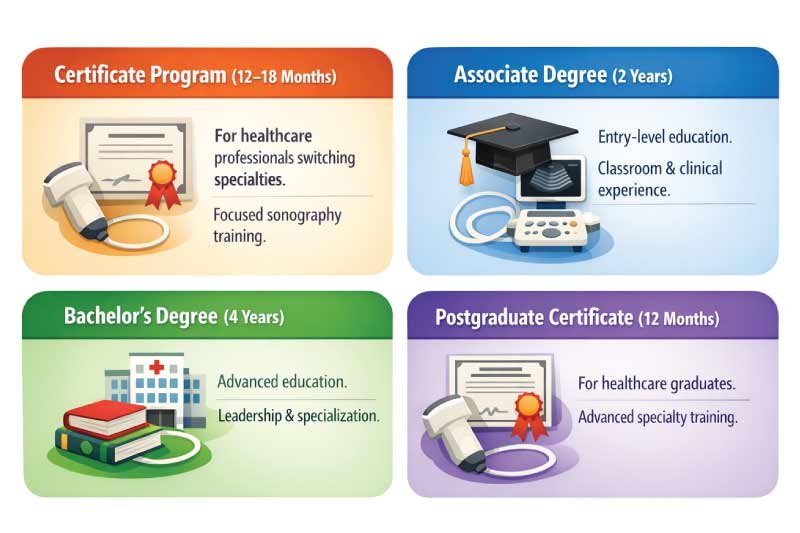
You've got Certificate programs. These are usually shorter, like a year or so. They're great if you already have a healthcare background or a related degree and want to specialize in sonography. Think of it as a super-fast track to sonic success!
Then there are Associate's Degree programs. These typically take two years. They offer a more comprehensive education and might be a good option if you're coming straight out of high school or want a broader foundation.
And for the truly ambitious, there are Bachelor's Degree programs. These usually take four years and offer the most in-depth knowledge, often including research and advanced topics. If you dream of leading a sonography department or becoming an educator, this might be your path.
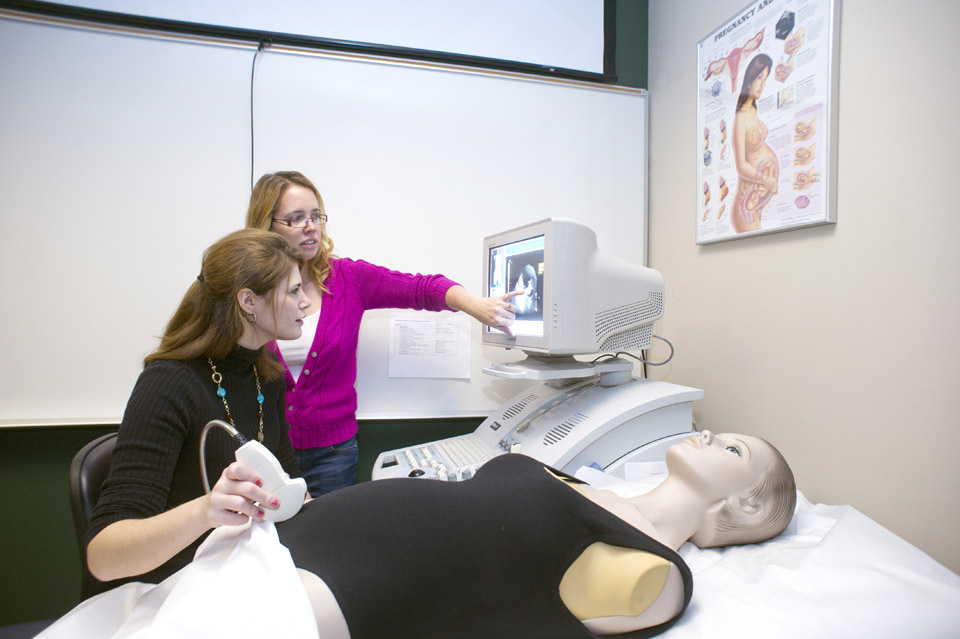
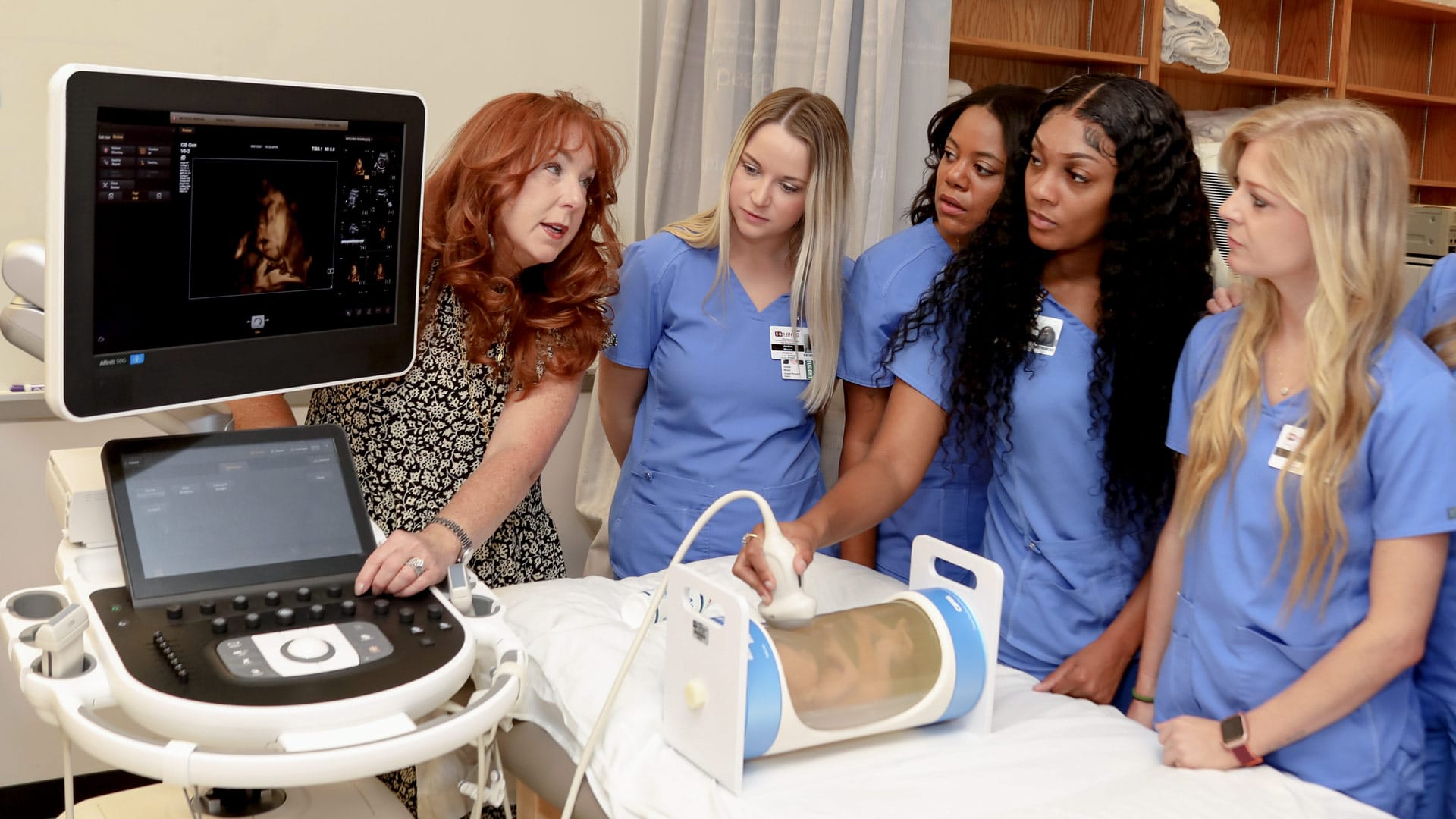
When you're comparing schools, think about what kind of learning style you prefer. Do you like hands-on labs where you can practice on simulated patients (or maybe even brave volunteers)? Do you prefer smaller class sizes where you can get personalized attention? Are there cool guest speakers who are actual ultrasound wizards sharing their secrets?

Look at their clinical externship opportunities. This is HUGE! You'll spend time in real hospitals or clinics, getting hands-on experience. Where do they place students? Are the facilities reputable? This is where you'll really hone your skills and make connections.
And don't forget about the faculty. Are they experienced sonographers with real-world knowledge? Do they seem passionate about teaching? A great instructor can make all the difference between a boring lecture and an exciting discovery.
Quirky Facts & Fun Stuff
Did you know that the first medical ultrasound was performed in the 1950s? Before that, doctors had to rely on X-rays, which are, well, radiation. Ultrasound is much gentler! It's like comparing a super-powered magnifying glass to a whole-body flashlight.
And the term "sonography" itself comes from the Latin word "sonus," meaning "sound." So, you're basically becoming a sound scientist! How cool is that?
Also, think about the sheer variety of what you can scan! From a tiny baby's brain to a beating heart, to the intricate workings of the abdomen. It's like having a backstage pass to the human body. You'll see things most people only dream of (or have nightmares about!).
And let's talk about the technology. These machines are getting more advanced by the minute. We're talking 3D and even 4D ultrasounds that can show you babies yawning or kicking their little feet in real-time. It's like watching a live action movie inside someone!
The Bottom Line: Your Sonic Adventure Awaits!
Finding the best ultrasound tech school is an adventure, for sure. It involves a little research, a dash of determination, and a whole lot of curiosity. Remember to check those requirements, make sure the program is accredited (seriously, this is your golden ticket!), and then dive into what makes each school unique.
Don't be afraid to ask questions. Call the admissions office, talk to current students if you can, and visit the campus if possible. You want to find a place where you feel excited to learn and where you know you'll get the best training to become an amazing sonographer.
So, go forth, brave future sonographer! Your journey into the amazing world of ultrasound is about to begin. And who knows, you might just discover your own superpower along the way. Happy scanning!

![Ultrasound Tech Schools | How To Become A Sonographer [2023]](http://betternurse.org/wp-content/uploads/2023/09/Ultrasound-Tech-Schools-Guide.png)